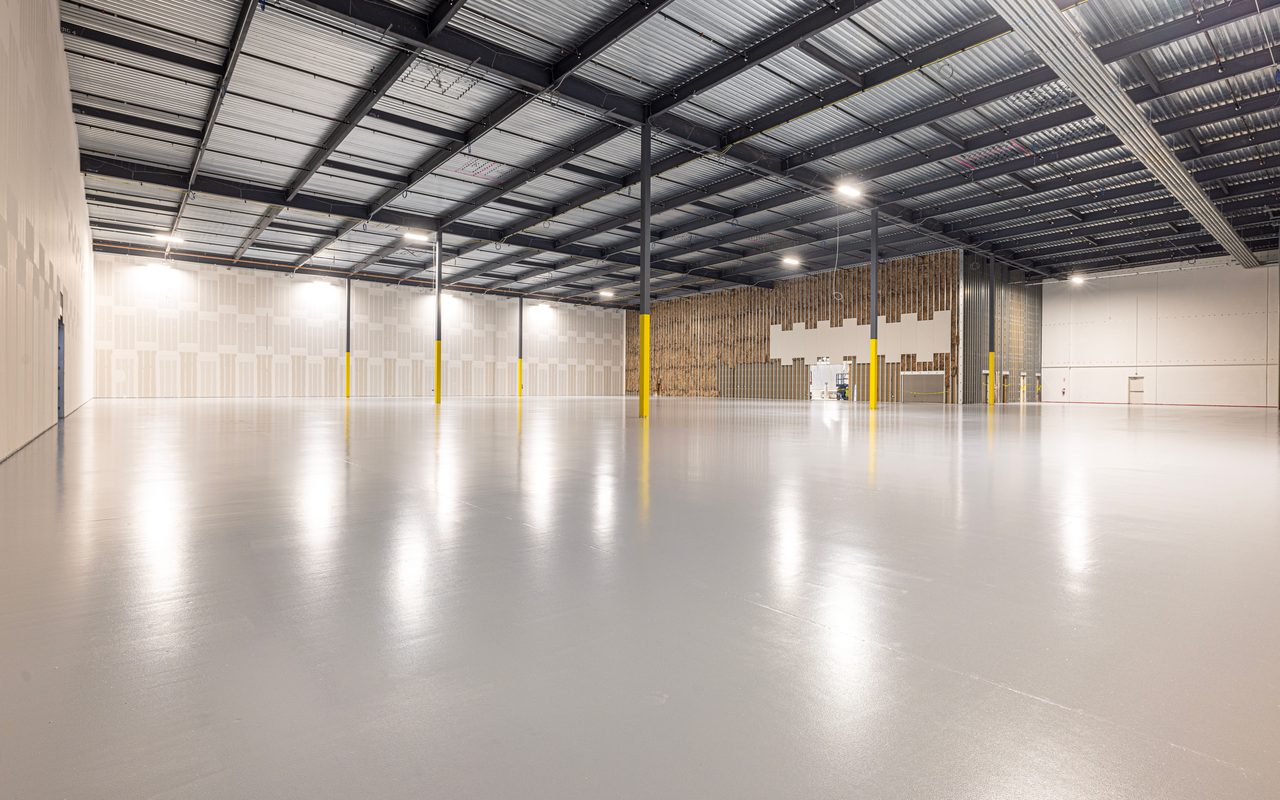
A warehouse that stops picking and dispatching loses money by the hour, so the first question most facility managers ask about epoxy warehouse floor coatings is how long they will be out of action. The honest answer is that the coating is rarely what holds things up. The plan is.
Space is also tight in the north. Hume City Council put vacancy in the north of its municipality at around 0.8 per cent when it opened the M80 Connect estate in Campbellfield in April 2024, and it described the area as still in high demand (Hume City Council). That is a 2024 figure, so check current conditions, but the point stands for anyone leasing in Campbellfield, Somerton, Epping or Tullamarine: there is usually no spare shed to move stock into while the floor is done.
How staging keeps the doors open
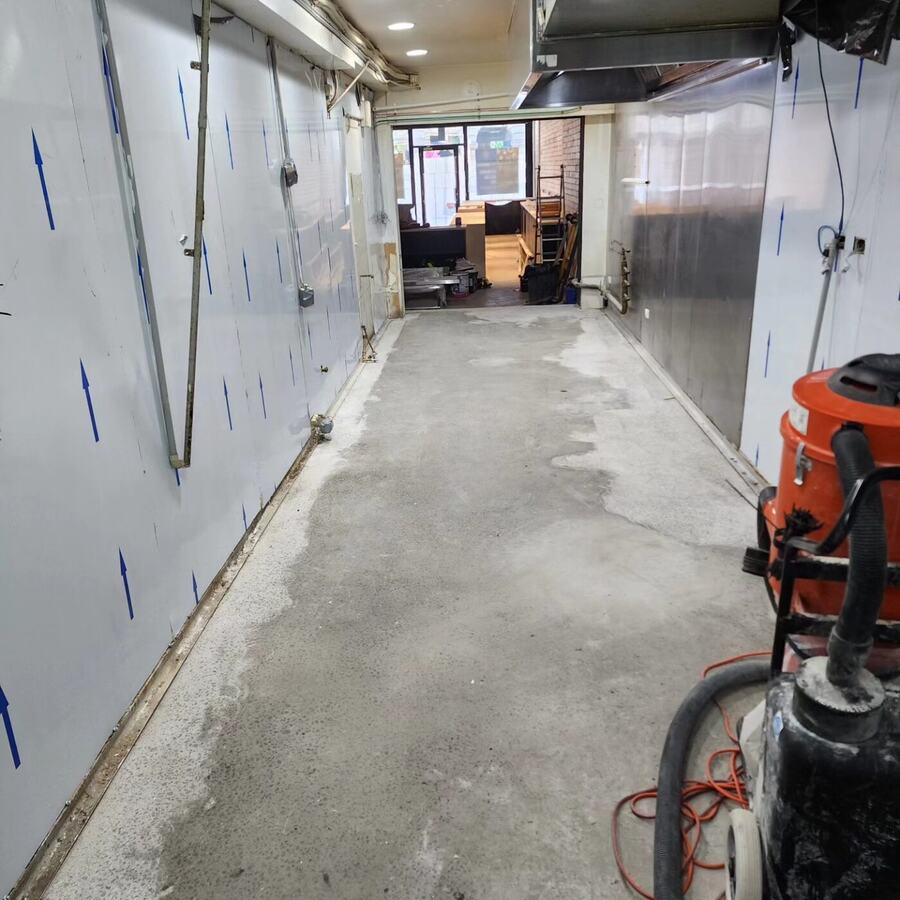
Staging means the floor is coated in sections rather than all at once. The warehouse is divided into zones, stock and racking in one zone are moved into the neighbouring one, forklift routes are changed, and the cleared zone goes through prep, primer, body coat and topcoat before the crew moves on. Our commercial and warehouse flooring work is set up this way: zone by zone, across weekends, or after hours, depending on how the site trades.
Good zones follow the way the building actually works. A dock apron that every truck crosses is a different problem from a back aisle that only one picker visits, and the two should not be in the same zone. We walk the site with the person who runs it, mark the zones on a plan, and agree what has to be moved and by whom before anyone touches a grinder.
What the cure timeline looks like
Cure time is where plans most often go wrong, so it helps to look at a published example. Dulux's fact sheet for its Luxafloor Express FCF system compares two build-ups at 25 degrees and 50 per cent relative humidity. A standard epoxy floor coating with a standard hardener is listed at about nine days to return to service. The fast-cure build-up is listed at about two days, with a recoat window of two hours (Dulux Protective Coatings). The sheet also says those times are a comparison and that total service time will vary.
The product you choose changes the programme far more than the crew does, which is why fast-cure systems exist. Our own site lists polyurea fast-cure systems that can put an area back in service in hours, which suits a loading apron that cannot be closed for two days. Those times also assume 25 degrees, and cold floors cure far more slowly, as our guide to winter commercial installs explains. Spring in Melbourne rarely holds a steady 25. A cool September morning or a damp October week slows cure, so a zone you hoped to reopen on Monday may need until Tuesday. We build a buffer into the schedule rather than promise a time and miss it.