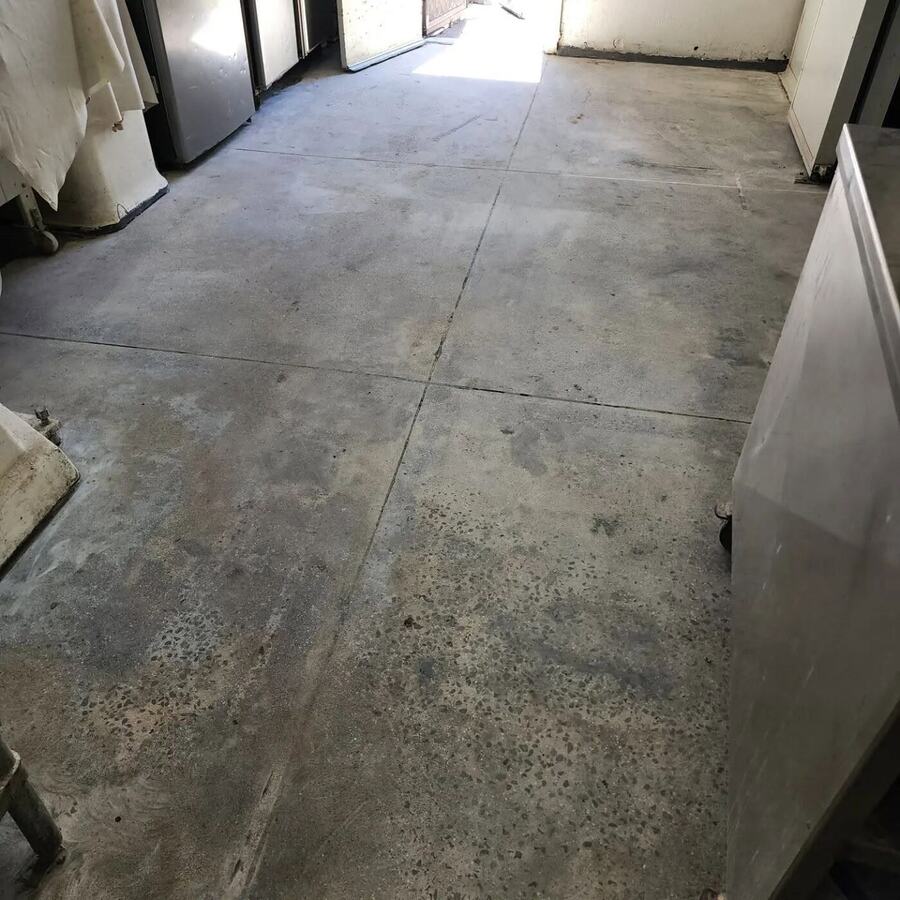
Can you epoxy a floor in winter? Yes, and commercial sites do it every year. The catch is that the air temperature on the day is the wrong number to watch. What matters is the temperature of the slab, the humidity around it, and how both sit against the limits on the coating's data sheet. This guide is written for an August job in Melbourne, when slabs are cold, sheds are damp and the schedule still has to hold.
What the data sheets say about temperature
Coating makers publish a working window, and it is narrower than most people expect. One Dulux water borne epoxy data sheet, dated December 2025, lists a minimum air and substrate temperature of 10°C and a maximum relative humidity of 85%. It also sets a concrete moisture limit of under 6% (Dulux Protective Coatings). The same sheet shows how slowly cold floors move. At a floor temperature of 10°C, light traffic is allowed after 48 hours, against 24 hours at 25°C, and the minimum wait before recoating is seven hours instead of four.
A Hychem data sheet for a fast cure novolac epoxy is blunter about the bottom of the range. It says the product cures at temperatures down to 5°C, yet it also warns that surface whitening is common below 16°C and that using epoxy coatings below 10°C is not recommended, because the blooming cannot generally be prevented. It adds that the white film does not change structural strength but can affect the adhesion of later coats (Hychem). So a product that cures cold can still leave a surface problem.
These two sheets are examples. Limits differ by product, so ask for the sheet for the exact coating on your job before the quote is signed.
Why the slab is colder than the air
The Bureau of Meteorology's summary for Greater Melbourne in July 2025 gives a feel for the season. Melbourne (Olympic Park) had a mean daily maximum of 14.8°C, and rainfall was near to above average at most sites, with Wallan (Kilmore Gap) recording its highest July total on record (Bureau of Meteorology). A typical winter day is cool and often wet.
A thick slab on ground has a lot of thermal mass. After a cold night it can sit well under the afternoon air temperature, especially in a shed that has had its roller doors open. The air may read 14°C while the floor is at 9°C, which is below the working window above. And if the slab surface is at or below the dew point of the air around it, moisture condenses on the concrete where nobody can see it. Coat over that film and you risk the white blush the Hychem sheet describes, along with poor adhesion.
The dew point is the temperature at which air can no longer hold its moisture. Warm, humid air meeting a cold slab causes condensation, and a damp Melbourne winter produces that often. The check takes a surface thermometer, a hygrometer and a note of both readings before any material is mixed.