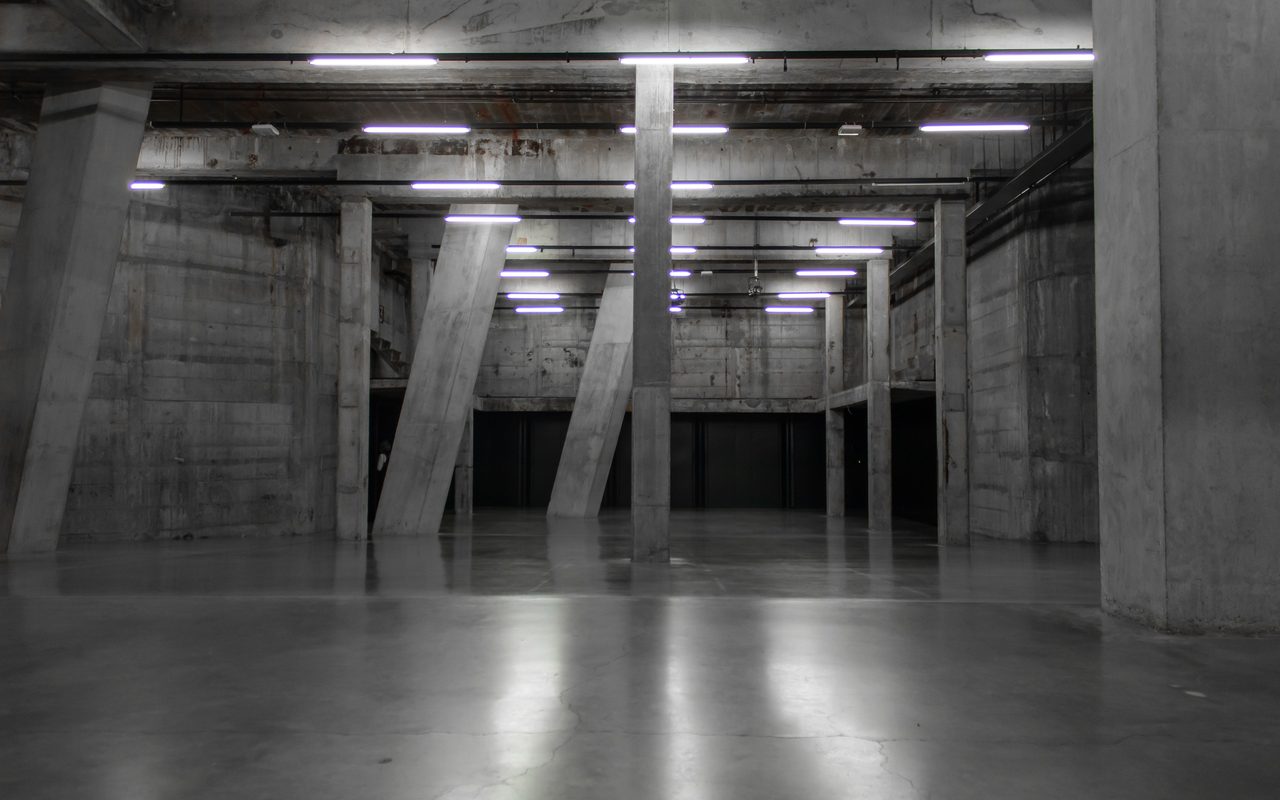
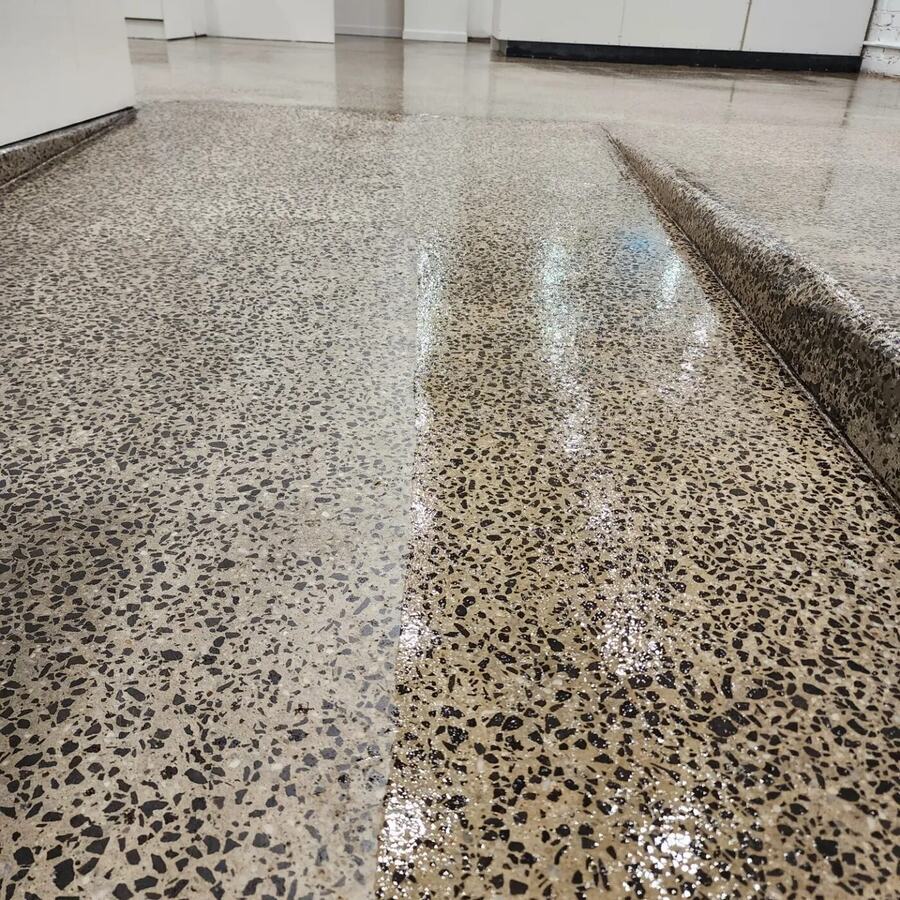
Polished concrete or epoxy is one of the first questions a business asks when it fits out a warehouse or industrial unit, and both work, though neither suits everything. Polished concrete grinds and hardens the slab itself. Epoxy adds a protective film on top of it. They fail in different ways, so the choice depends on what hits the floor: spills, forklift wheels, moisture, and the condition of the concrete you already have. We install both, so this is not a sales pitch for one.
Polished concrete or epoxy: what each one is
Polished concrete is a ground slab. Diamond tooling removes the surface and exposes the aggregate, a densifier hardens what is left, and the floor is polished to the sheen you want and usually sealed. There is no thick film to wear through, because the floor is the slab. Epoxy is a coating system. The slab is ground to open its pores, then primed and covered in one or more coats, often with aggregate for grip and a clear topcoat to finish. The surface you walk on is the film.
That difference drives the rest. A polished floor is only as good as the concrete under it, and an epoxy floor is only as good as the bond between film and slab.
Slip resistance
A Cement Concrete and Aggregates Australia data sheet on the slip resistance of polished concrete notes that the surface finish, texture and any applied sealer combine to give the final surface roughness (Cement Concrete and Aggregates Australia). The same logic applies to epoxy. The sheen of the finish, the aggregate in the coating and the sealer all change how a wet floor feels underfoot. A highly polished floor in a loading area that sees water and oil needs to be looked at on that basis, and so does a glossy epoxy topcoat.
Spills and staining
Concrete is porous, and a sealed polished floor is protected only as well as its sealer. Acids etch concrete, and oils can soak in where the sealer has worn. Epoxy forms a chemical resistant film, which is why it is common in workshops and plants. A Dulux water borne epoxy sheet, for example, lists good resistance to splash and spillage of hydrocarbon solvents and dilute acids (Dulux Protective Coatings). If your operation spills strong chemicals, epoxy or another industrial coating usually has the edge, and our guide to chemical resistant epoxy flooring explains how those ratings work. If spills are rare and cleaned up fast, polishing can cope.
Forklifts and wear
Polished concrete handles hard wheels and constant traffic well because it is a ground slab with nothing to peel. Its weak point is the concrete. Joints, cracks and patches show through, and old repairs stay visible. Epoxy hides some of that, but a coating wears where tyres turn, and scuffs show first at corners and crossings, and the same wear shows up on ramps and loading dock aprons. Neither is maintenance free, and high traffic areas wear faster in both.
Slab quality decides a lot
Polishing needs a sound slab with a reasonable finish. If the concrete is patchy, heavily repaired or has inconsistent aggregate, the polish will show every difference. Epoxy is more forgiving of cosmetic problems, though not of moisture or contamination. That is why slab preparation comes before the choice of finish. Our guide to preparing a commercial slab explains the testing and repair that either option needs.
Where northern Melbourne's new estates fit
Hume City Council announced the groundbreaking of the North Melbourne Logistics Estate on Somerton Road, Campbellfield, in March 2024. The council described a site of more than nine hectares with a $130 million investment, 140 construction jobs and 230 ongoing jobs, and direct routes to the Hume Highway, the Metropolitan Ring Road and the Somerton Inland Freight Terminal (Hume City Council). New buildings like that start with fresh slabs, and the floor decision gets made while the slab is new. Tenants fitting out a unit should ask early what the slab is and what finish suits their use.
Choosing between them
- Strong chemicals, wash-down or regular spills: lean towards epoxy or an industrial coating.
- Dry storage with hard wheel traffic and a good slab: polishing is a strong candidate.
- Mixed use: polish the office and showroom, coat the dock, workshop and wet areas.
- Poor slab or heavy repairs: coat it, or fix it properly first.
- Marking and demarcation: epoxy takes line marking more readily, as on our commercial and warehouse flooring page.
Spring is a busy time for fit-outs, and floors are often the last decision made before stock arrives. If your unit is near Tullamarine, our Tullamarine commercial page covers the area. We will inspect the slab, tell you which finish we would choose for it and why, and give you a written scope, a fixed price and a 7-year warranty. The commercial flooring page lists what we install.