Most commercial floor failures start under the coating, not in it. Peeling, bubbling and patchy adhesion usually trace back to moisture in the slab, a surface that was never opened up properly, or cracks and joints that were coated over instead of dealt with. If you are comparing quotes, the line items for preparation tell you more than the line for the topcoat. A proper slab prep covers the steps below, in the order they happen.
Start with a concrete moisture test before epoxy
Concrete holds water, and a slab on ground can keep drawing it up from the soil beneath. Epoxy is a film, and a film over a wet slab can blister or lose its grip as moisture tries to leave. That is why coating data sheets set a limit. One Dulux water borne epoxy sheet gives a maximum concrete moisture content of under 6% and lists diamond ground or track blasted concrete as the suitable substrate (Dulux Protective Coatings). Other products set different limits and use different test methods, so the sheet for the system on your job is the reference.
A floor that looks and feels dry can still fail, so appearance tells you very little. When a contractor says the slab is fine, ask:
- Which method was used, and where on the slab were readings taken?
- What limit was the result compared with, and where does it come from?
- What is the plan if the slab is too wet: wait, or use a moisture tolerant primer system?
Winter makes this more than a formality. In late August a slab in a cold shed has had months of wet ground and low evaporation. A reading taken after a dry week will not match one taken after a wet fortnight, so a test result is only good for the day it was taken. Newer slabs add another variable, because concrete releases its mix water for a long time after the pour. If the building is new, say so when you ask for a quote.
Diamond grinding opens the surface
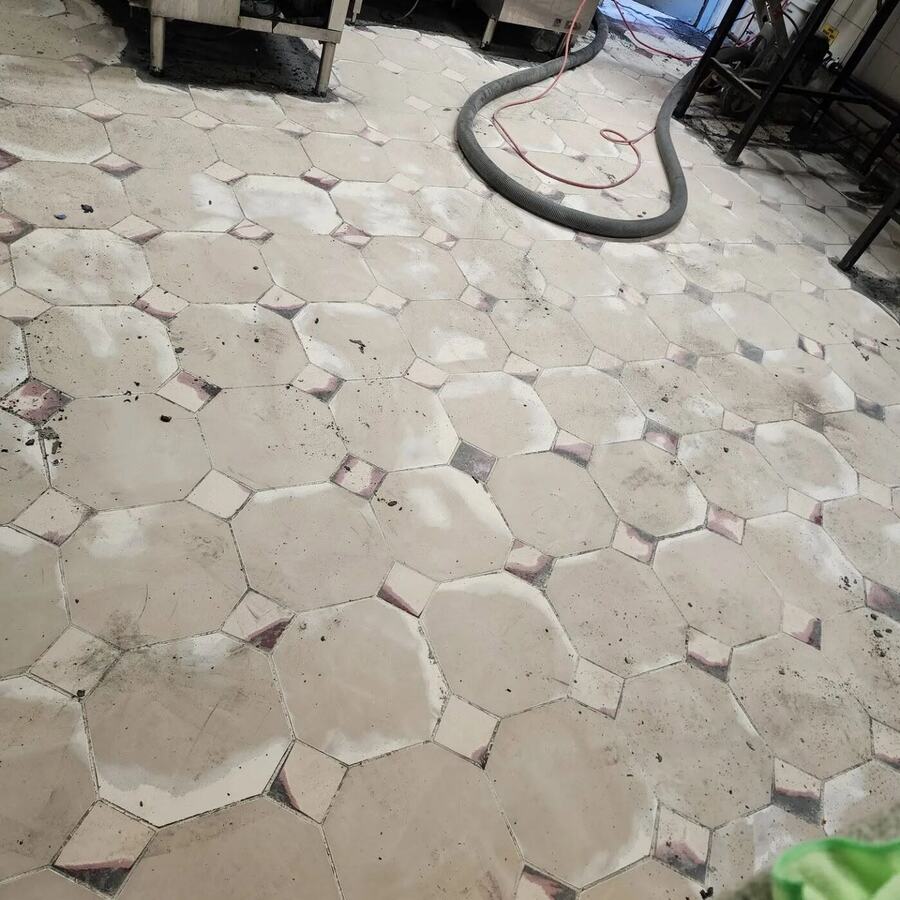
Grinding does two jobs. It removes the weak skin of the slab, which includes laitance, curing compounds, old coatings and surface contamination, and it creates a profile the primer can grip. A Hychem data sheet for a novolac epoxy asks for a surface free of fats, oils, curing agents and laitance, names shot blasting or diamond grinding as the preferred techniques, and expects a prepared surface with a tensile strength of at least 1.5 MPa (Hychem). A good scope should aim to meet a standard like that, whatever system is used.
Oil is the awkward case. Concrete in workshops and loading areas soaks up lubricants, and grinding alone does not always remove them. If a floor has been oiled for years, tell the contractor early, because it may need degreasing, repeated grinding, or a different approach before anything bonds.
Cracks and joints
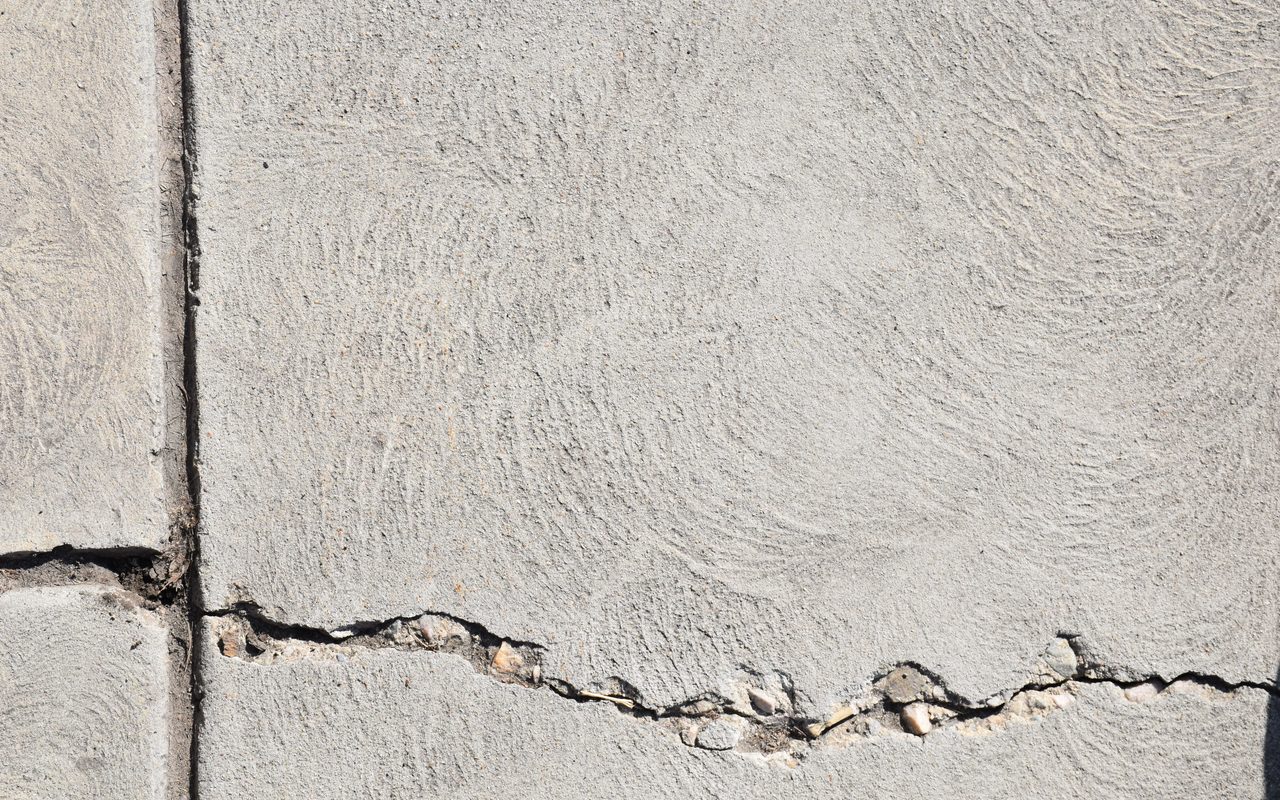
Not every crack is the same, and treating them all the same is how coatings split. A static crack, one that has stopped moving, can be routed and filled or injected with a rigid repair so the floor is level and sound again. A live joint is different. Saw cuts and construction joints exist so the slab can move, and a hard coating bridged across one will crack along the same line within months.
- Static cracks are opened, cleaned and filled or injected before grinding is finished.
- Spalled or chipped edges are cut back and rebuilt so the coating does not sit on crumbling concrete.
- Control and expansion joints are treated as joints, using a flexible sealant that can move, not filled solid and coated over.
- Low spots and surface holes are patched so the finished floor drains and wears evenly.
Our standard commercial system, described on the commercial and warehouse flooring page, includes shot blasting or diamond grinding, crack injection and surface repair, then a primer and moisture barrier before the body coat. The repair work is listed in the scope so you can see it.
Dust and the rules around it
Concrete contains crystalline silica, and grinding it releases fine dust. WorkSafe Victoria describes controls such as water suppression at the point of dust generation and on-tool dust extraction connected to a Class M or H vacuum. It says never to use compressed air, dry sweeping or high-pressure water to clean up, because that puts dust back in the air, and it treats respirators with at least a P2 filter as the last line once other controls are in place. Using a power tool to cut or grind material containing crystalline silica is a crystalline silica process, and it counts as high risk work if it is likely to produce dust above half the exposure standard of 0.05 mg/m³ (WorkSafe Victoria).
If your site stays open during the work, the dust has to be controlled, and a contractor who cannot explain their controls is a risk to your staff and to you. Ask how dust will be contained and cleaned up.
What a good prep scope shows
- The moisture test method, locations and result, with the limit it was compared against.
- Grinding or shot blasting, and the profile the primer needs.
- Crack, spall and joint repair, listed by type and approximate location.
- Dust controls and how the area will be cleaned.
- What happens if the slab fails the moisture test.
If you read our earlier note on winter installs, the same thinking applies: the data sheet sets the limits, and the readings decide the schedule. If your building is in Epping, our Epping commercial page covers the area. Our commercial flooring page lists the facility types we work in. We inspect the slab first, then give you a written scope, a fixed price and a 7-year warranty.