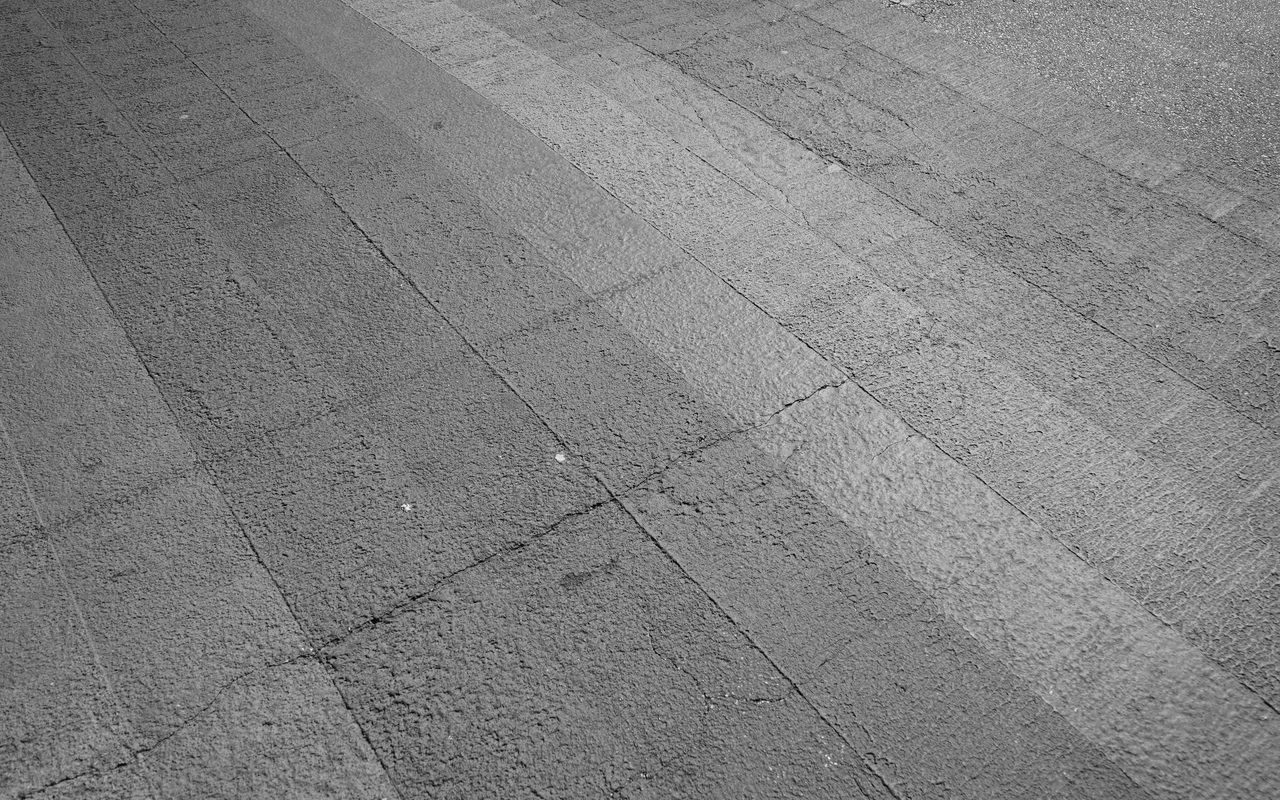
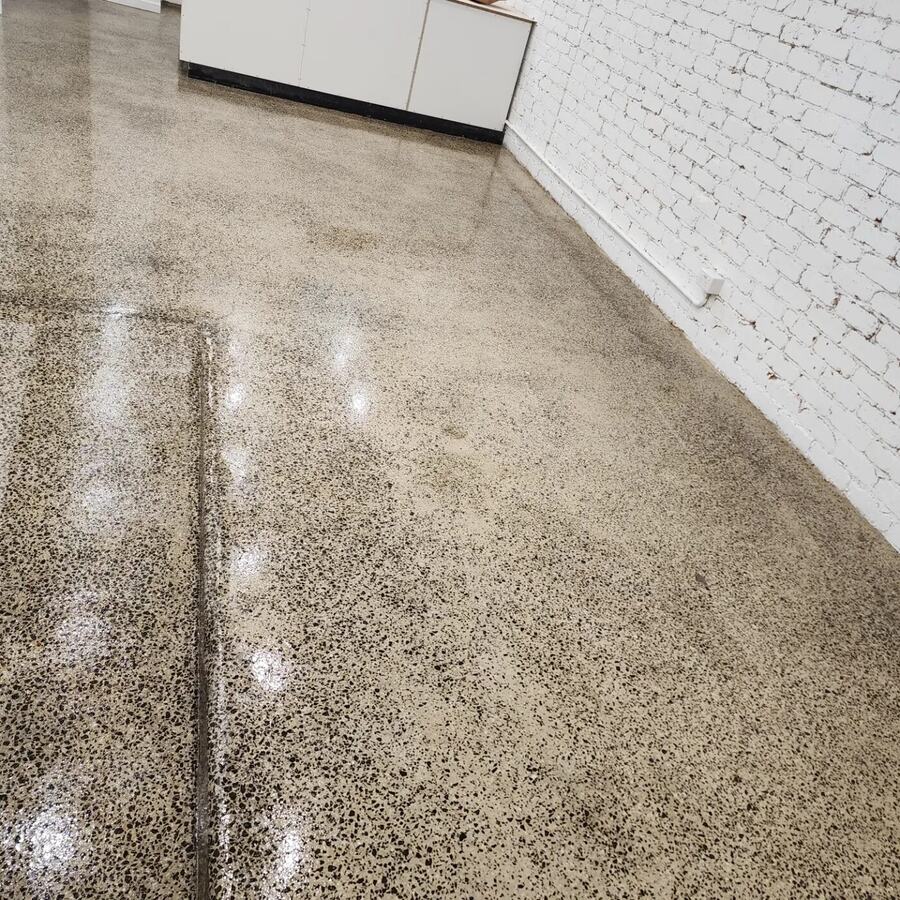
Epoxy over cracked concrete is one of the most common questions we get from facility managers, and the honest answer starts with another question: why did the slab crack? A fine crack that opened in the first months and has stayed the same width is a different problem from a joint that opens and closes with every temperature swing. A coating can bridge the first kind once the crack is repaired. It cannot hold the second kind still. This guide explains the difference in plain terms, using an Australian engineering article and a sealant data sheet, so that you can ask better questions before a large industrial floor is coated.
Why industrial slabs crack in the first place
Concrete shrinks as it loses water while curing. If that shrinkage is restrained and the tensile strength of the concrete is exceeded, a crack forms. An Australian engineering article on crack control in plain concrete industrial pavements describes the usual causes. The top of a slab dries faster than the bottom, which causes curling at the edges of panels, and larger panels make it worse. Friction against the base can lock zones of the slab so that panels shrink toward those zones instead of their centres. Columns and walls can also restrain a panel, which is why isolation joints or pockets are used around them (Intrax).
The article explains why joints exist. A saw-cut contraction joint is a deliberate line of weakness, cut to about a third of the slab depth with a blade of 3 to 5 mm, so that the slab cracks there instead of at random. It says typical Australian industrial panels run from about 4.5 m up to around 6.0 m, and recommends avoiding large panels. Timing matters: the cut has to be made late enough that the surface can carry the saw but early enough that no cracks have formed, which the article puts at roughly 4 to 24 hours after pouring depending on curing conditions.
The article is undated on its page, so treat it as general background and check against the current CCAA industrial floor guidance and your engineer's design.
Why a joint that moves is not the same as a crack that has stopped
The Intrax article gives numbers that show why joint width matters. Load transfer across an unreinforced joint depends on aggregate interlock, and the reported effectiveness falls as the joint opens: essentially 100 percent at 0.6 mm, about 60 percent at 0.9 mm, about 15 percent at around 1.5 mm and minimal at 2 mm. Hard-wheeled forklifts are the main concern, and the article says they can start joint damage with a height difference of only about 1 mm, which is why it recommends reinforced joint edges for those cases.
For a coating, this has a direct meaning. A rigid coating bonded across a joint that is still opening and closing will usually reflect that movement as a crack in the coating, because the coating has nowhere to take up the strain. One manufacturer's guidance for a conductive primer says that construction joints and existing static cracks must be pre-treated before coating (Sika). The word static is important there. A crack that is no longer moving can be repaired and coated. A joint that was designed to move needs to stay a joint.
What a movement joint sealant is designed to do
A joint sealant data sheet for trafficable joints in floors shows what is expected of the material that fills a joint. Sika's Sikaflex PRO-3 sheet (February 2019 version) describes a one-component polyurethane sealant for movement and connection joints in floors, pedestrian and traffic areas, warehouses and production areas. It lists a movement capability of plus or minus 25 percent under ISO 9047 and plus or minus 35 percent under ASTM C 719. It requires a joint width of at least 10 mm and no more than 40 mm, a width to depth ratio of 1 to 0.8 and a closed-cell polyethylene foam backing rod. Its joint design table shows that the wider the spacing between joints, the wider the joint has to be: for interior joints, 10 mm minimum width at spacings up to 6 m, rising to 18 mm at 10 m. It also says joints must be designed and dimensioned to the relevant standards before construction (Sika).
We are not saying this is the product used on any particular site. The sheet is useful because it shows that a joint sealant is a designed detail with a movement allowance, not a bead of filler. It also shows that a rigid epoxy cannot do that job.
A sensible order for cracks and joints in a commercial floor
Our commercial system includes crack injection and surface repair, a primer and moisture barrier, and a high-build body coat on a shot-blasted or diamond-ground slab, and you can see the full list on our commercial and warehouse page. The sensible order for a slab with cracks and joints is:
- Map the slab. Mark every crack and joint, and note which have moved, which are static and which are saw cuts.
- Ask whether the slab was designed with joints, and get the joint layout from the builder or engineer if one exists.
- Repair static cracks before priming, so the coating has a sound base.
- Keep live joints as joints. Cut the coating through at the joint line after it cures, then fill with a flexible sealant sized for the movement.
- Protect joint edges in forklift lanes, where wheels hit the edge first.
Wheels hit joint edges first, so if a hard-wheeled forklift fleet crosses a joint, tell us and the edge detail goes into the scope.
Winter changes how joints behave
Melbourne slabs are coldest in June and July. Concrete contracts when it cools, so some joints open wider in winter, and cracks that look tight in summer can look different now. If you are inspecting a floor ahead of a spring project, record joint widths on a cold morning as well as a warm afternoon, and tell the installer both numbers. That is also a good time to look at budget planning around the end of the financial year, with the shutdown for the work set for a warmer window.
Questions to ask before a coating goes over a cracked slab
- Which of these lines are joints, and which are cracks?
- Have the cracks stopped moving, and how was that checked?
- How will joints be formed through the coating, and what sealant movement allowance is specified?
- How will joint edges be protected where forklifts cross?
- What does the warranty say about cracks that reappear?
Sites near our home base can start with the Mickleham commercial page or the Roxburgh Park commercial page. We inspect the site, give you a written scope and a fixed price, and back the work with a 7-year warranty.