Melbourne's #1 Rated Epoxy Flooring · Call 0481 847 597

Chemical Resistant Epoxy Flooring for Workshops and Factories: Standard Epoxy vs Novolac

Resistance is a rating against a named chemical, at a named strength, for a named time. How to read the charts and what to tell your installer.

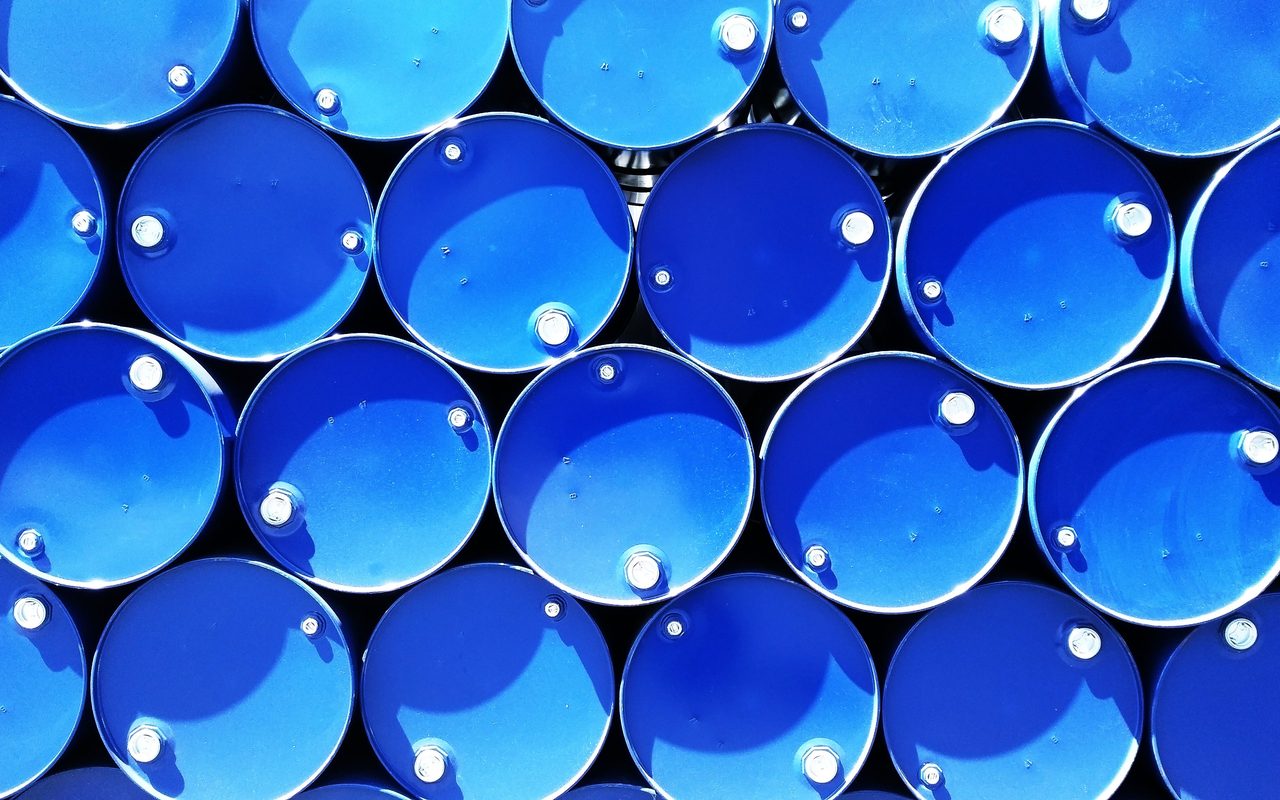
Stacked blue steel drums seen from above
Stacked steel drums. Stock photo, not an SSA job. Photo by Conrad Marshall on Pexels

Chemical resistant epoxy flooring is not one product. Every epoxy resists some chemicals better than others, and the word "resistant" only means something when it is attached to a named chemical, a concentration and a contact time. A workshop that sees oil and brake fluid has different needs from a plant that handles acids or caustic soda, and a floor chosen for one can fail quickly in the other. This guide explains how to read the claims, where novolac epoxy fits, and what to tell an installer before you get a price.

How to read a chemical resistance chart

Manufacturers test coatings against a list of chemicals and report the result, but they do it in different ways, so two sheets are rarely comparable at a glance. A Fosroc data sheet for a novolac epoxy uses a code. R means resistance to long term immersion of up to 60 days, S means resistance to short term immersion of 24 hours, Rc means resistance to regular contact but discolouration may occur, and Os means resistance to occasional splashes (Fosroc). The same sheet rates 25% sulphuric acid as R and 98% as Rc, but acetone, dichloromethane and 63% nitric acid only as Os. One product gives several different answers.

A Hychem data sheet uses another method. It reports how much a sample absorbs after exposure, where a value of 100 equals 3% absorption. For its fast cure novolac coating it lists 20% caustic soda and 16% sodium hypochlorite as unaffected, and 60% sulphuric acid as very good (Hychem). The same sheet warns that acids and sanitising agents may attack the pigments and cause discolouration, and that different epoxies have different resistance, so the product has to be matched to the service environment.

Charts answer a narrow question. Before you rely on one, ask what concentration was tested, how long the sample was exposed and whether the test was immersion or splash.

Standard epoxy and novolac epoxy

A general purpose water borne epoxy is a good example of the standard end. The Dulux sheet for one such product describes good resistance to splash and spillage of hydrocarbon solvents, alcohols, most common alkalis and dilute acids (Dulux Protective Coatings). That suits plenty of workshops and stores, where spills are occasional and get wiped up.

Novolac epoxies use a different resin chemistry, with more cross linking, and the charts above show what that buys: tolerance of stronger acids and longer contact. The Fosroc sheet describes its product as designed principally for acid proofing in mining processing and similar installations where high chemical resistance is required. Whether that is needed in your building is a specification question. Strong acids, regular wash-down with aggressive sanitisers, or spills that sit for hours point towards novolac. Occasional oil and cleaning products usually do not.

Bring the safety data sheets for what you handle. Whether a novolac or another industrial chemistry suits is a decision made against that list, and we will say so if a coating is not the right answer.
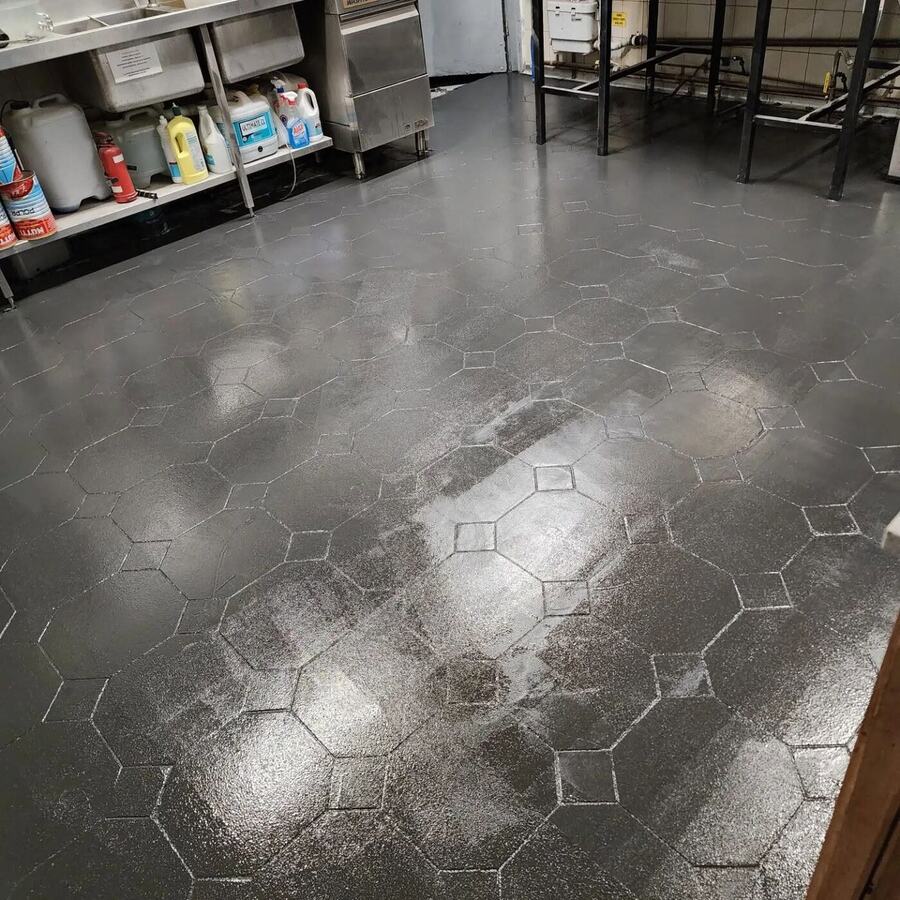
Dark coated floor in a commercial kitchen with shelving of cleaning products
A coated commercial floor in a space where cleaning chemicals are used daily.

Mechanic workshops: oil, brake fluid and hoists

Workshops test "chemical resistant" daily, and the chemicals are usually ordinary (our workshop floor guide covers oil-soaked slabs and hoists). The trouble is the combination in one bay: engine oil, brake fluid, coolant, degreasers and hot tyres.

Our industrial floor coatings section describes chemical bunding systems with coved skirting for areas storing or handling acids, alkalis and solvents, and the commercial page lists a chemical resistant full flake system for automotive workshops. Both are scoped to your chemicals, not a standard recipe.

Bunds, coving and joints

A floor coating is only one part of containment. In a bunded area the coating has to run up the walls as coved skirting so there is no seam at the base, and the joints need attention too. The Fosroc sheet recommends a purpose formulated chemically resistant joint sealant as part of the overall protection system when floors have joints. A resistant coating over a joint sealed with an ordinary sealant leaves a weak point exactly where a spill will go.

Cure time comes before chemical exposure

A coating does not reach its resistance on the day it is applied. The Hychem sheet gives a full chemical exposure time of three days, and the Fosroc sheet gives a full cure of seven days at 23°C. Late August is still cold in Melbourne, and cooler floors cure more slowly, so a bay put back into service early can lose a coating that would have been fine a week later. Put the date for full chemical exposure in the written scope. If your first spill is likely to be on day one, say so.

What to give your installer

Slab condition matters as much as chemistry, because a contaminated floor can fail the bond before it ever meets a chemical. Our guide to preparing a commercial slab covers that side. If your site is in Broadmeadows, see our Broadmeadows commercial page, and the industrial section of our commercial page lists the systems in detail. We inspect the site, give you a written scope and a fixed price, and back the work with a 7-year warranty.

Sources

By Sealing Solutions Australia · Published 27 Aug 2026

Questions people ask

Epoxy resists many chemicals, but not equally. Resistance depends on the chemical, its concentration, the contact time and the product. Always check the data sheet against your own chemical list.

Novolac epoxies use a different resin chemistry that tolerates stronger acids and longer contact. Data sheets for novolac systems list high concentration acids that general purpose epoxies are not rated for.

It depends on the system, so name them in the scope. Brake fluid softens many paint finishes, and hot tyres can mark softer coatings. The system should be chosen with both in mind.

It varies. One Hychem sheet gives three days for full chemical exposure, and one Fosroc sheet gives seven days for full cure at 23°C. Cold weather slows both.

Want a number for your floor?

Free site inspection, written scope of work and a fixed price. Sammy Kocas calls same day.

📍 Commercial & industrial, all Melbourne

Free Commercial Quote

Site inspection within days.

🎉

You're All Set!

Thanks! We'll call you shortly to book a site visit.
In a hurry? 0481 847 597

🔒 No obligation. Free on-site quote.