Melbourne's #1 Rated Epoxy Flooring · Call 0481 847 597

Mechanic Workshop Floor Paint or Coating? Oil, Hoists, Drains and Getting a Clean Bond

A busy workshop floor is soaked in oil before the first coat goes on. Why preparation, hoists and drains decide the result more than the paint.

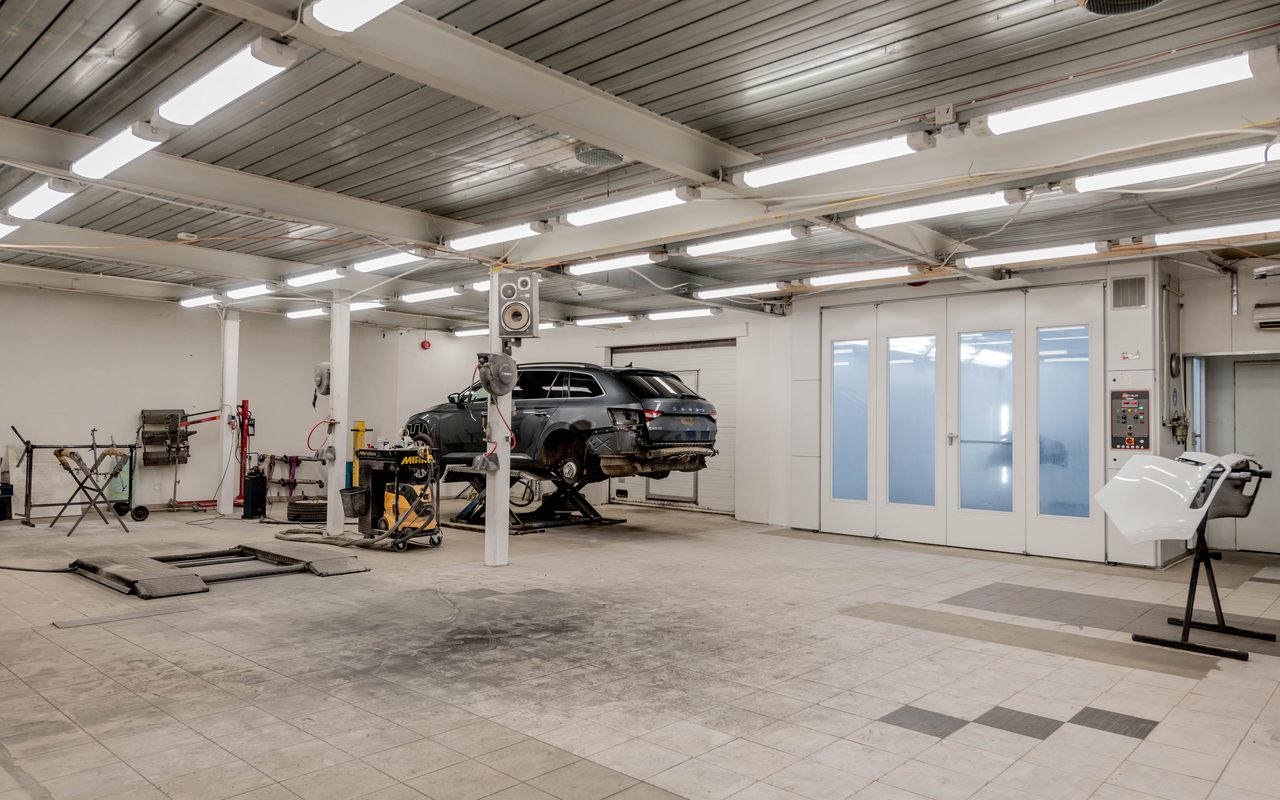
Car repair workshop with an oil-stained floor, relevant to mechanic workshop floor paint
A car repair workshop with a stained floor. Stock photo, not an SSA job. Photo by Renee Razumov on Pexels

Mechanic workshop floor paint is a common way to waste money on a floor. A workshop slab is soaked in oil, brake fluid and coolant long before anyone mentions colour, and coatings do not bond to contaminated concrete. This guide covers what a workshop owner should ask about before choosing a floor, from preparation to hoist loads to what happens to the water that leaves the building. It is written for car, truck and motorcycle workshops in Melbourne, in the cold, wet weeks of mid-winter when floors are at their messiest.

Oil is already in the concrete

Concrete is porous. Years of drips from sumps, gearboxes and hydraulic lines soak down into the surface, and a coating laid over that oil has nothing solid to hold. A Sika data sheet for an epoxy coving mortar is clear about it. The surface must be clean and sound, and the sheet lists form oils, hydraulic or fuel oils, brake fluid, grease and other contaminants as things that must be removed because they prohibit a good bond. It calls for mechanical preparation to a surface profile of ICRI CSP 3 to 6, and for concrete of at least 25 MPa compressive strength with a minimum of 1.5 MPa in tension at the time of application (Sika).

That is one product's sheet, but the principle applies widely. In a workshop, preparation usually means grinding or blasting back to clean concrete, and sometimes more than once where the oil is deep. A floor that looks clean can still be saturated. If an installer proposes to degrease and roll, ask how they know the oil is gone. Our guide to industrial floor coatings describes the preparation steps we expect in a commercial scope.

Hoists, jacks and point loads

A hoist concentrates a vehicle's weight onto two or four small plates. Floor jacks and engine stands do the same on wheels. A thin coating over a slab that has not been checked can crack or crush under those points, and a hoist installed later has to be anchored into the slab through the coating. Plan the hoist positions before the floor, and tell the installer where the plates and anchors will be. The slab's thickness and condition under the plates is a structural question that sits with whoever installs the hoist. The coating's job is to survive the load once the slab is sound, and a thicker build helps with wear and gouging.

What the floor meets every day

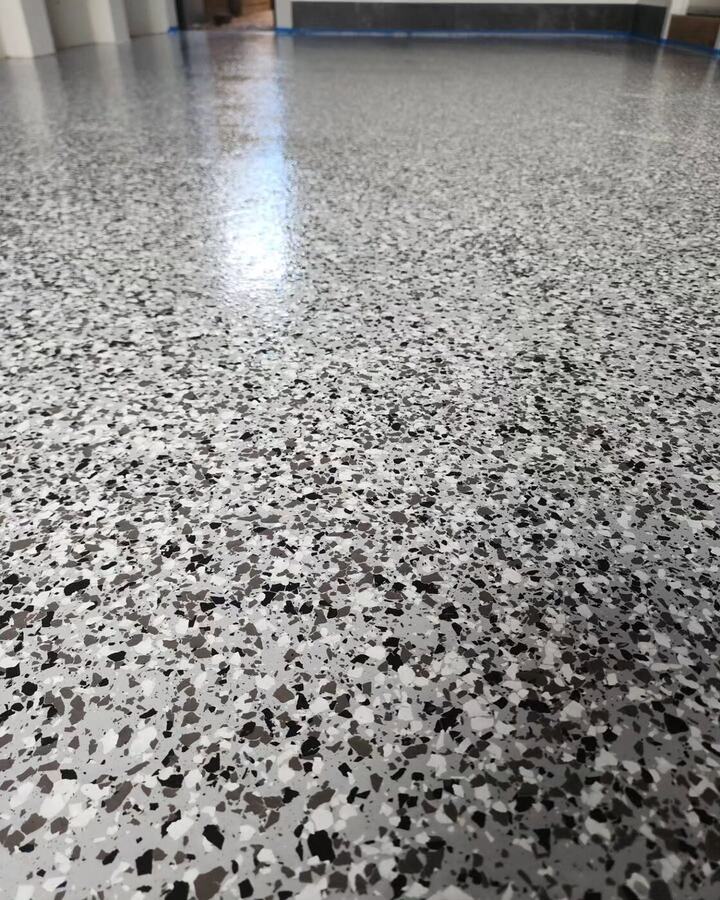
Glossy flake epoxy finish on a commercial floor
A glossy flake epoxy finish on a commercial floor.

Slip risk in a wet, oily bay

WorkSafe Victoria's injury hotspot guidance says wet and slippery floors are a leading cause of slips, trips and falls, and advises slip-resistant surfaces where floors are exposed to grease, oil, water or dust. It also says to clean up spills immediately and fix their cause, and to store materials away from walkways (WorkSafe Victoria). A glossy finish shines nicely in a car showroom and becomes a hazard under an oily boot. Ask for a textured finish where staff walk and work, and agree how it will be cleaned. Our car park and loading dock coating guide explains how texture and cleaning trade off.

Drains and what leaves the building

EPA Victoria's guidance for the auto industry says to repair vehicles under cover, store liquids in a roofed and bunded area, place spill trays under work areas, and keep portable bunds and spill kits on hand. It says that for floor cleaning, a water and oil separator such as a triple interceptor trap should be used, with wastewater sent to the sewer and the separated oil disposed of separately. It adds that a trade waste agreement with your water corporation is needed before industrial waste goes to the sewer (EPA Victoria).

A coating does not change those duties. What it can do is make a floor easier to keep clean and a spill easier to see and contain. Falls toward a drain, sealed joints and a coved edge at walls and bund lips all help a spill stay where you can deal with it. These are drainage and plumbing questions as much as flooring ones, so confirm them with the right trades and your water corporation.

Workshop floor checklist

Our commercial page lists a chemical-resistant full flake system for automotive workshops, and we scope it to your own fluids and layout. If your workshop is in Craigieburn or nearby, start at our Craigieburn commercial page. We inspect the slab, give you a written scope and a fixed price, and back the work with a 7-year warranty.

Sources

By Sealing Solutions Australia · Published 23 Jul 2026

Questions people ask

Not reliably. Coatings do not bond to oil-soaked concrete, so the slab has to be mechanically prepared back to clean concrete first. One Sika data sheet lists oils, brake fluid and grease as contaminants that must be removed.

It depends on the fluids, loads and cleaning. A chemical-resistant system with texture where staff walk is common. Name oil, brake fluid and degreaser in the scope and ask for the data sheet.

Point loads from hoist plates and jacks can crack a weak slab or gouge a thin coating. Plan hoist positions before the floor, and have the slab checked by whoever installs the hoist.

No. EPA Victoria sets separate duties for bunding, spill kits, separators and trade waste. A coating can make spills easier to contain and clean, but it does not replace those requirements.

Want a number for your floor?

Free site inspection, written scope of work and a fixed price. Sammy Kocas calls same day.

📍 Commercial & industrial, all Melbourne

Free Commercial Quote

Site inspection within days.

🎉

You're All Set!

Thanks! We'll call you shortly to book a site visit.
In a hurry? 0481 847 597

🔒 No obligation. Free on-site quote.