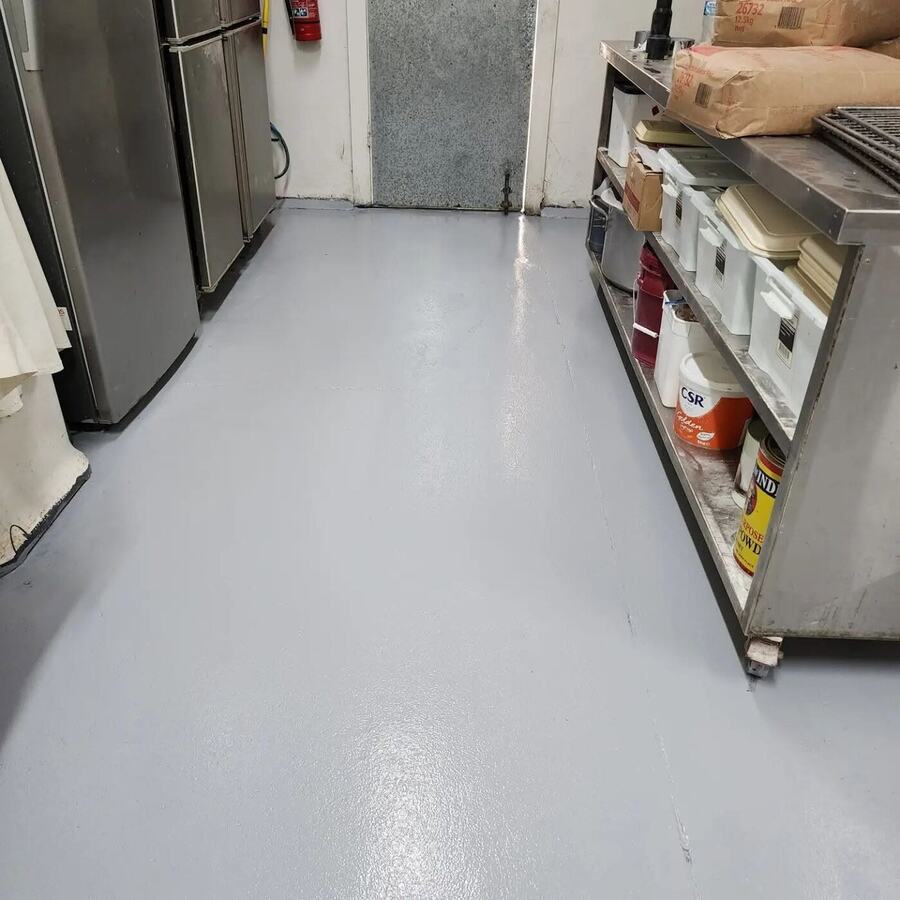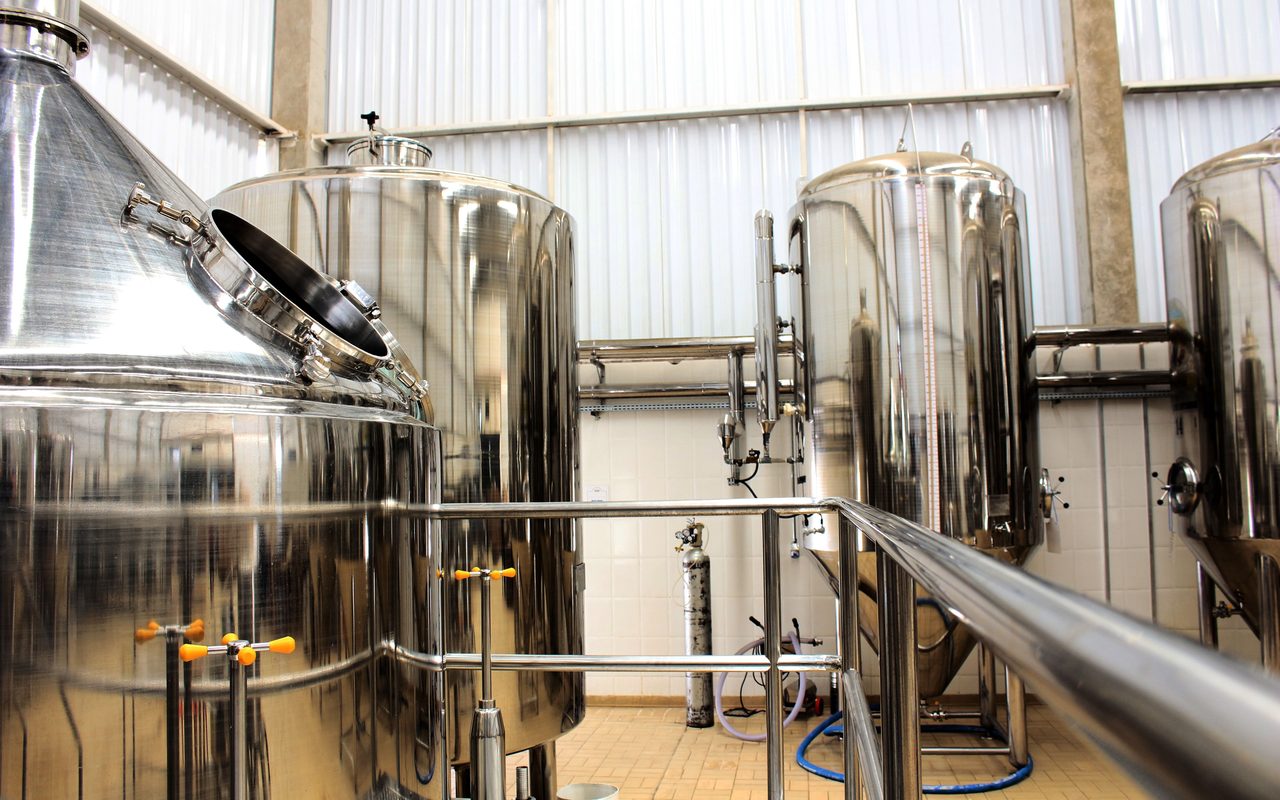
Cold room floor epoxy is a common request, and it needs a careful answer. A cool room or freezer slab is not just a cold warehouse floor. It sees large temperature swings, often a hot wash-down, and a base of concrete that is cold and damp for much of its life. This guide is for food and drink manufacturers, wholesalers and caterers planning a floor in or beside refrigerated space.
What thermal shock does to a floor
Thermal shock is the stress a floor takes when its temperature changes quickly. A food production area can sit near 10°C in meat processing and above 20°C in a hot kitchen, and wash-down water is often around 68°C, according to a 2022 article in Food & Drink Business. The same piece explains the mechanism. Materials expand when heated and contract when cooled, so a slab cooled on one side and washed with hot water on the other is under constant strain, and concrete can crack where two sections are exposed to different temperatures (Food & Drink Business).
The coating on top has to survive that movement. The article says the surface should expand and contract at a rate close to the concrete beneath it, and it names polyurethane cement as the best match for that. It also makes two blunt claims about epoxy. It says epoxy softens under hot wash-downs above 50°C and bonds poorly to cold or damp concrete. Those statements come from one trade article, not a standard, so treat them as a prompt for questions rather than a verdict. They are a reminder that "epoxy" covers many products, and that the one on the data sheet for your job is the one that counts.
What a technical data sheet actually rates
Manufacturers publish thermal limits, and they differ by build thickness. A Fosroc fact sheet for a self-levelling polyurethane cement topping and its sealer lists a smooth dry-process floor at 3.5 mm with a thermal shock range of -15°C to 80°C. For the heaviest category, described as wet process and cold rooms, it specifies a total thickness of 8 to 9 mm and a thermal shock range of -25°C to 100°C, with cleaning at up to 100°C. The same sheet says the sealer on its own is rated only from 0°C to 60°C (Fosroc).
The rating depends on the thickness and the number of coats, not just the product name. A thin coating on the same slab would not carry the same number. When a quote does not state the thickness of a cold room floor, ask for it.
Cold, damp concrete is the main risk
The Food & Drink Business article says weak adhesion between floor and substrate shows up under temperature stress and leads to the coating separating (our guide to a peeling commercial floor covers how adhesion is tested). It identifies the concrete interface as the critical point, and says epoxy is the most sensitive of the common options to cold and moisture in the base. Coating makers say similar things about cold weather work in general. For a cool room, the practical points are:
- Moisture in the slab should be measured, not assumed, before any coating goes down.
- If an existing room is being converted to a freezer, the article notes that cutting the floor and installing an expansion joint lets the concrete move and lowers the risk of cracking. That is a building decision to settle before the floor finish.
- The substrate is prepared mechanically, usually by grinding or blasting, so the coating has something to grip.
- The Fosroc sheet gives curing times of 36 hours to light traffic at 10°C and 24 hours at 20°C, and a full chemical cure of 12 days at 10°C against 7 days at 20°C. A cold site stretches the programme.