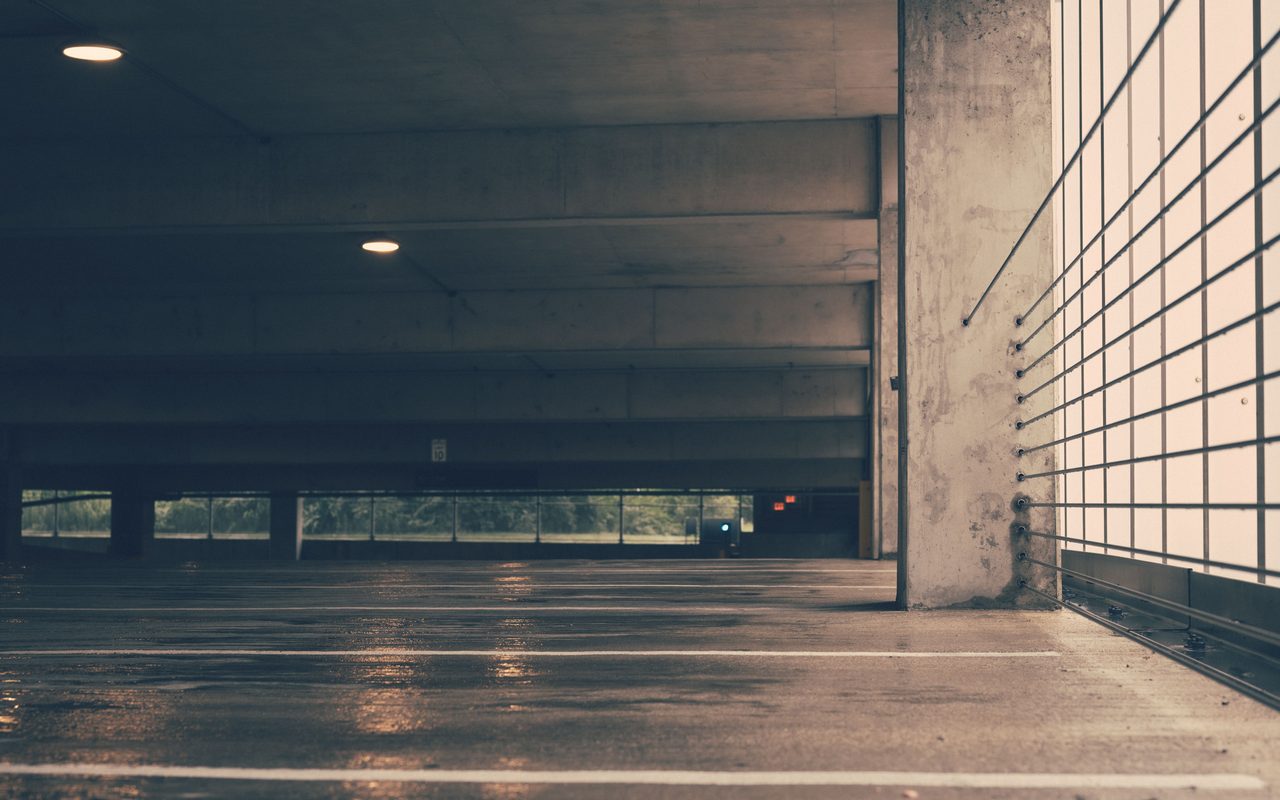
Car park floor coating is often treated as a cheaper cousin of warehouse flooring, and that is where trouble starts. A car park deck, a ramp or a loading dock has its own demands. Tyres turn on the surface, rain and oil end up on it, and the slab underneath moves as temperatures change. This guide covers what to think about for commercial car parks, loading bays and delivery aprons in Melbourne, in the middle of a wet winter when problems tend to show.
Why a car park is not a warehouse floor
An indoor warehouse slab sits in a stable environment. A car park deck does not. Concrete expands and contracts, cracks open and close, and water gets into places it should not. Coating makers reflect that in how they build their systems. A Hychem data sheet for a polyurethane deck membrane describes a four-layer build: a primer, a base coat, an intermediate coat and a topcoat. It says the intermediate coat can be left out for foot traffic only, but for vehicular traffic it is required (Hychem).
The same sheet gives two specification levels. A light to medium duty system with fine anti-slip totals about 2.4 mm. A heavy duty system with medium to coarse anti-slip totals about 4 mm. It lists elongation of over 400% for the membrane layers, which is what lets the coating bridge movement. It also notes that live cracks wider than 0.6 mm need to be treated as flexible joints, routed out and filled before coating. A rigid film laid over a moving crack will tend to reflect it, as our piece on joints and crack movement in industrial slabs explains.
This is one product's sheet, not a rule for every system. It shows the questions to ask: what total thickness is quoted, whether the system is flexible or rigid, and what is planned for the cracks and joints.
Water, oil and slip risk
WorkSafe Victoria's injury hotspot guidance for slips, trips and falls says wet and slippery floors are a leading cause of incidents. It tells employers to keep car parks and entrances clean, well lit, clear of obstacles and in good condition, and to use slip-resistant surfaces where floors are exposed to grease, oil, water or dust. It also says spills should be cleaned up immediately and the cause fixed (WorkSafe Victoria).
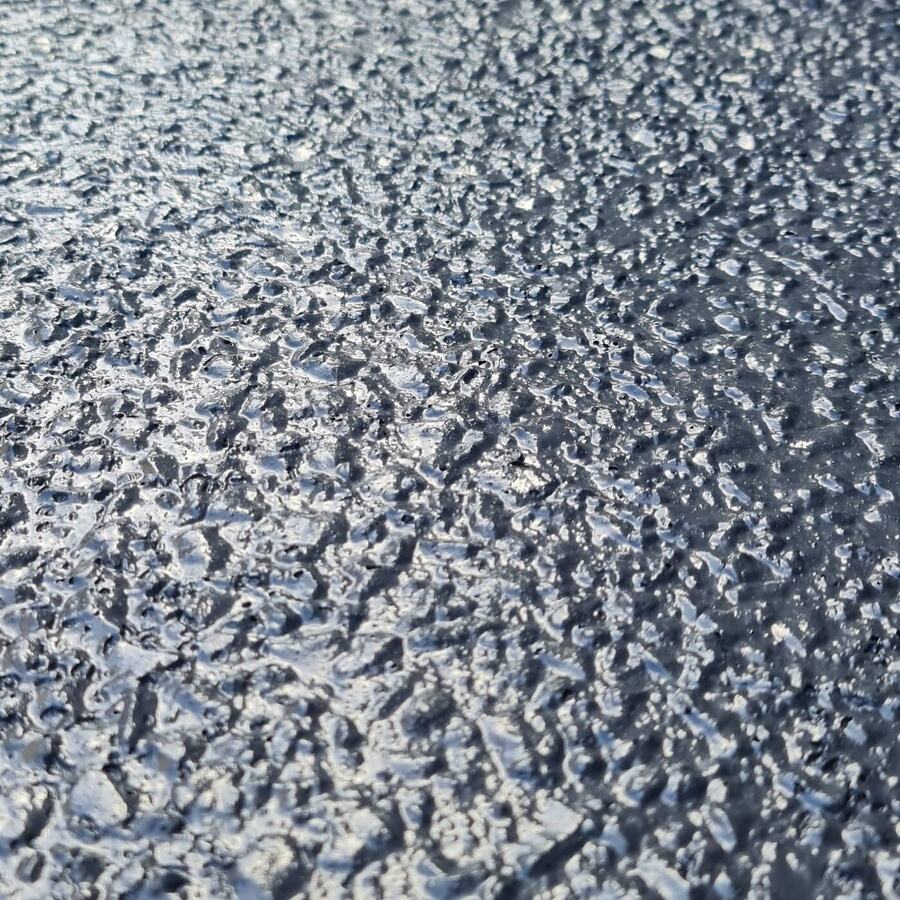
For a coating, that means texture. A smooth, glossy finish looks tidy when dry and can be treacherous when wet. The Hychem sheet addresses this by offering an aggregate broadcast for a textured, anti-slip surface. How much texture is right depends on the slope, the traffic and how the area is cleaned. A steep ramp that collects rainwater needs far more grip than a flat dry bay, and the rougher the surface, the harder it is to clean. Our guide to line marking options shows how bay markings and walkways can be included in the same scope.